
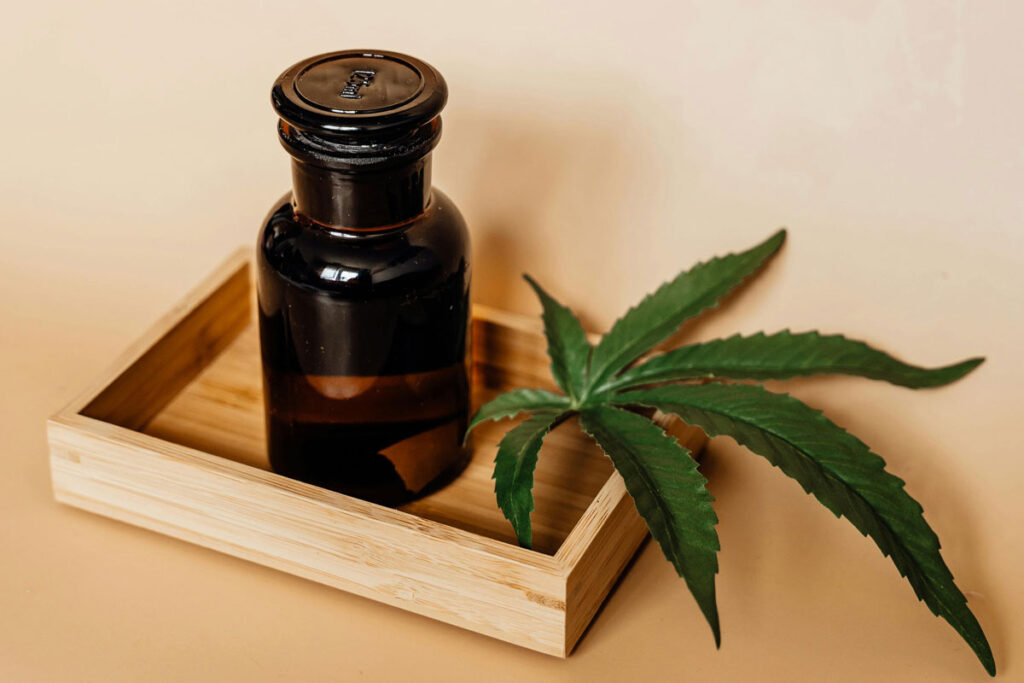
If you notice that your CBD oil looks cloudy, has layers, or appears to have separated inside the bottle, you may wonder whether something is wrong with the product. In many cases, separation is a normal physical change caused by the ingredients in the formula, temperature, or storage conditions.
CBD oil is typically made by combining CBD extract with a carrier oil and sometimes other ingredients such as terpenes or flavoring compounds. Since these ingredients can respond differently to changes in temperature and storage, the oil may occasionally change in appearance or consistency.
Understanding why CBD oil separates can help you determine whether it simply needs to be mixed or whether there may be a reason to avoid using the product.
What Does It Mean When CBD Oil Separates?
CBD oil separation occurs when some of the ingredients in the product no longer remain evenly distributed throughout the liquid. You may notice a thicker layer at the bottom, floating particles, cloudiness, or differences in texture.
This does not automatically mean that the CBD oil has gone bad. Some formulas naturally separate because of their ingredients.
However, significant changes in smell, color, texture, or appearance can sometimes indicate that the product has degraded or was not stored properly.
Why Does CBD Oil Separate?
Several factors can contribute to CBD oil separation. Understanding these causes can make it easier to identify whether the change is normal.
1. Temperature Changes
Temperature is one of the most common reasons CBD oil changes consistency.
Cold temperatures can cause carrier oils and other ingredients to become thicker. Certain components may also become cloudy or form small crystals. When the oil warms up again, these changes may gradually disappear.
On the other hand, excessive heat can affect the stability and quality of the ingredients over time.
For this reason, CBD oil is generally best stored in a cool, stable environment away from extreme temperatures.
2. Differences Between Ingredients
CBD oil may contain several ingredients with different physical properties. CBD extract, carrier oils, terpenes, flavoring ingredients, and other compounds may not always behave identically.
Even when a product has been properly formulated, some ingredients can gradually settle or separate during storage.
This is particularly important with more complex formulations containing multiple botanical compounds.
3. Natural Settling
Some CBD products contain naturally occurring plant compounds that can settle over time.
If the bottle has been sitting undisturbed for an extended period, you may notice a difference between the upper and lower portions of the liquid.
Gentle mixing may help redistribute the ingredients. However, always follow the product manufacturer’s instructions before shaking or mixing the product.
4. Cold Storage
Keeping CBD oil in a particularly cold location can make separation more noticeable.
The carrier oil may become thicker, while certain components may appear cloudy or form visible particles. Once the product returns to an appropriate room temperature, its appearance may become more uniform.
Avoid repeatedly exposing the product to major temperature changes because consistent storage conditions are generally better for maintaining product quality.
5. Exposure to Heat
High temperatures can also affect CBD oil.
Leaving a bottle in direct sunlight, near a heater, or inside a hot vehicle can expose the product to excessive heat. Prolonged heat exposure may affect the stability of CBD and other ingredients.
A dark, cool storage location is generally a better choice than a windowsill, car, or other warm area.
6. Long-Term Storage
CBD oil does not necessarily remain unchanged indefinitely. Over time, exposure to oxygen, light, heat, and repeated opening can contribute to changes in the product.
As CBD oil ages, you may notice changes in color, smell, flavor, or consistency.
Always check the product’s expiration or best-before date and follow the manufacturer’s storage recommendations.
Is Separated CBD Oil Still Good?
Separation alone does not necessarily mean that CBD oil is unsafe or unusable. The reason for the separation and the overall condition of the product matter.
If the oil has simply become thicker or slightly cloudy after being stored in a cool environment, the change may be related to temperature.
However, you should be more cautious if the product has an unusual or unpleasant smell, significant discoloration, unexpected texture changes, visible contamination, damaged packaging, or is past its expiration date.
When in doubt, check the manufacturer’s instructions or contact the manufacturer before using the product.
Should You Shake CBD Oil Before Using It?
Whether you should shake CBD oil depends on the product.
Some products may benefit from gentle mixing if ingredients have settled, while others may have specific instructions provided by the manufacturer.
Instead of automatically shaking every CBD oil bottle, check the product label or manufacturer’s directions first.
If the label recommends shaking before use, gently mix the bottle as instructed to help distribute the ingredients more evenly.
How to Store CBD Oil Properly
Proper storage can help minimize unwanted changes in appearance and preserve product quality.
1. Keep It Away From Direct Light
Light exposure can contribute to the degradation of certain compounds over time. Store CBD oil in a dark cabinet or another location away from direct sunlight.
2. Avoid Extreme Temperatures
Try to keep CBD oil in a stable, moderate environment. Avoid leaving it in very hot or cold places for extended periods.
3. Keep the Bottle Tightly Closed
Air exposure can contribute to oxidation over time. Close the bottle securely after each use to limit unnecessary exposure to air.
4. Store It Upright
Keeping the bottle upright can help reduce the risk of leaks and unnecessary contact between the oil and the bottle’s opening.
5. Follow the Manufacturer’s Instructions
Different CBD oils can have different formulations and storage requirements. The product label should always be your primary guide for storage and handling.
Does Separation Mean CBD Oil Has Expired?
Not necessarily.
Separation can occur before a product reaches its expiration date because of temperature, settling, or differences between ingredients.
However, expiration is one factor you should consider when evaluating a product. If the CBD oil is past its recommended shelf life and has also developed unusual changes in smell, appearance, or texture, it may be better not to use it.
Always check the manufacturer’s expiration or best-before information.
How Can You Tell if CBD Oil Has Gone Bad?
There is no single visual change that can confirm that CBD oil has spoiled. Instead, look for several signs together.
Potential warning signs include:
- A strong or unpleasant smell that is different from the original product
- Major or unexpected changes in color
- Unusual texture that does not improve under normal storage conditions
- Visible signs of contamination
- Damaged or compromised packaging
- A product that is significantly past its recommended shelf life
- Storage in extreme heat or direct sunlight for a prolonged period
If you notice multiple unusual changes, avoid using the product and contact the manufacturer for guidance.
Does Every CBD Oil Separate?
No. Different CBD oils use different formulations, extraction methods, carrier oils, and additional ingredients.
Some products may remain uniform throughout their shelf life, while others may naturally become cloudy or show mild settling under certain conditions.
The appearance of separation by itself is therefore not enough to determine the quality of a CBD oil.
Also Read: How CBD Oil Is Made: From Hemp Plant to Final Product
Final Thoughts
CBD oil can separate for several reasons, including temperature changes, natural settling, differences between ingredients, and prolonged storage. Mild changes in appearance do not automatically mean that the product has gone bad.
Proper storage can help maintain the quality and consistency of CBD oil. Keep it away from direct sunlight and extreme temperatures, close the bottle properly after use, and always follow the manufacturer’s storage instructions.
If separation is accompanied by an unusual smell, significant discoloration, visible contamination, or other unexpected changes, it is best to be cautious and seek guidance from the manufacturer before using the product.